Some days my screen time says three hours, yet it feels like I was on the phone all day. It was never the hours. It was the count. I only understood that feeling after I spent a day counting how many times I picked the thing up.
Across surveys, adults check their phones roughly 60 to 100 times a day, sometimes past 150. Against 16 waking hours, that comes to about once every 10 minutes. The count matters more than the hours because every check breaks whatever you were doing, and coming back costs time. The screen time page on your phone shows the pickup number, and spending one day counting with tally marks on paper makes the number land in a way the screen never does.
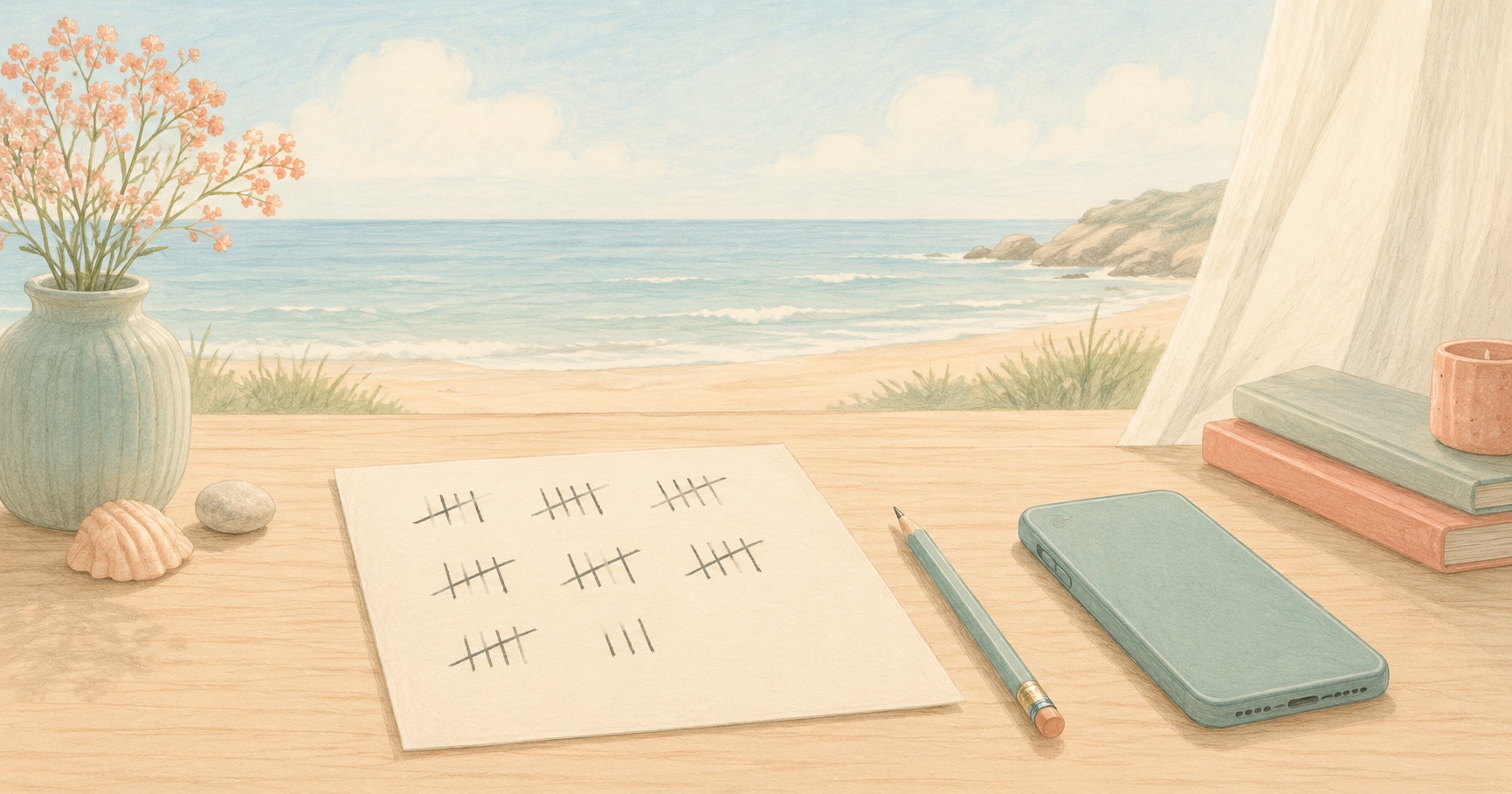
The numbers move with the method, but the range holds. Studies that installed logging apps on phones found daily averages from several dozen to around a hundred pickups, and when measured in individual screen touches, the counts run into the thousands. Most adults light up their screens upwards of 50 times a day. People in their twenties check the most, and the count declines with age, the same shape as screen time.
| Measure | Range | What it means |
|---|---|---|
| Pickups | Roughly 60 to 100 a day | Times the screen turns on or unlocks |
| Length of one check | Mostly 1 to 2 minutes | Glancing at notifications, checking the time |
| Long sessions | A few per day | Video, social, games. Most of the total hours |
| Interval between checks | About every 10 waking minutes | How often your work gets cut |
Three hours in one sitting and three hours as ninety two-minute bursts are not the same three hours. Every check pulls you out of what you were doing, and getting back in costs time. Research on attention puts full recovery after an interruption at several minutes to over ten. At ninety checks a day, the recovery time alone eats hours.
A high count also means the phone is spread thin across your entire day. That is why three hours of use can feel like a whole day on the phone. Until I counted, I assumed that feeling was an illusion. I counted. It was not.
Two ways. First, the counter your phone already keeps: on iPhone it is Pickups inside Screen Time, on Android it is unlocks inside Digital Wellbeing. Second, a day of tally marks on paper. Every time you pick up the phone, draw one stroke. It will not be precise, and that is fine, because the act of counting itself reduces the checking. The hand heads for the phone, detours to the pencil, and that pause filters out a check.
Counting also shows you what the checks are made of. To see the time. To see a notification. Or the hand just went. My biggest category was turning it on to check the time and sliding into another app. After I bought a watch, that category nearly vanished. Remove the reasons one by one and the count follows.
On the day you count on paper, your number will come in lower than usual, because you know you are counting. It will still surprise you.
Sumbi's dive doesn't count your checks. It builds a stretch of time where checking doesn't happen. Keep the screen off through a 30-minute dive and those 30 minutes hold together in one piece, with your remaining breath shrinking only while another app is open. It's a way to drop one thick piece into a thinly spread day.
Try your first 10-minute dive →Most checks are answers to notifications. Keep only what actual people send and kill the rest, and the count drops before anything else does. No ring, no reason. The week I cleaned up my notifications, my count fell by about a third.
On the desk, the hand goes. In a bag or a drawer, picking it up takes one extra motion, and that one motion filters checks out. The practice of the 9 p.m. drawer runs on exactly this principle.
The most reliable way to cut the count is to declare one stretch where checking simply does not exist. Thirty minutes or an hour where the phone is treated as not there. One such piece a day and the count visibly drops.
One line from a phone-down day. The day I counted on paper, I was at seventy-eight. Fewer than twenty were because I needed something. The rest were just the hand going.
This article is general information, not medical advice. If sleep or daily life stays disrupted, talk to a professional.
Scan the QR with your phone to open the install page.
 Sumbi
Sumbi