The first time I thought seriously about cutting back wasn't about my mind. It was my neck. Mornings started stiff at the back, and evenings ended with dry, gritty eyes. My body had been reporting in for a while. I just kept ignoring the reports.
Long phone sessions signal first in three places: the neck, the hands, and the eyes. The lower the head tilts, the heavier the load on the neck, so the back of the neck and shoulders stiffen. Gripping one-handed and scrolling with a bent wrist strains the base of the thumb and the wrist. And blinking drops by half while staring at a screen, so eyes dry out. The fixes are simple: raise the phone toward eye level, look far away every 20 minutes, scroll with the index finger. If pain spreads into the arm or fingers, or blur will not clear, get it checked by a doctor.
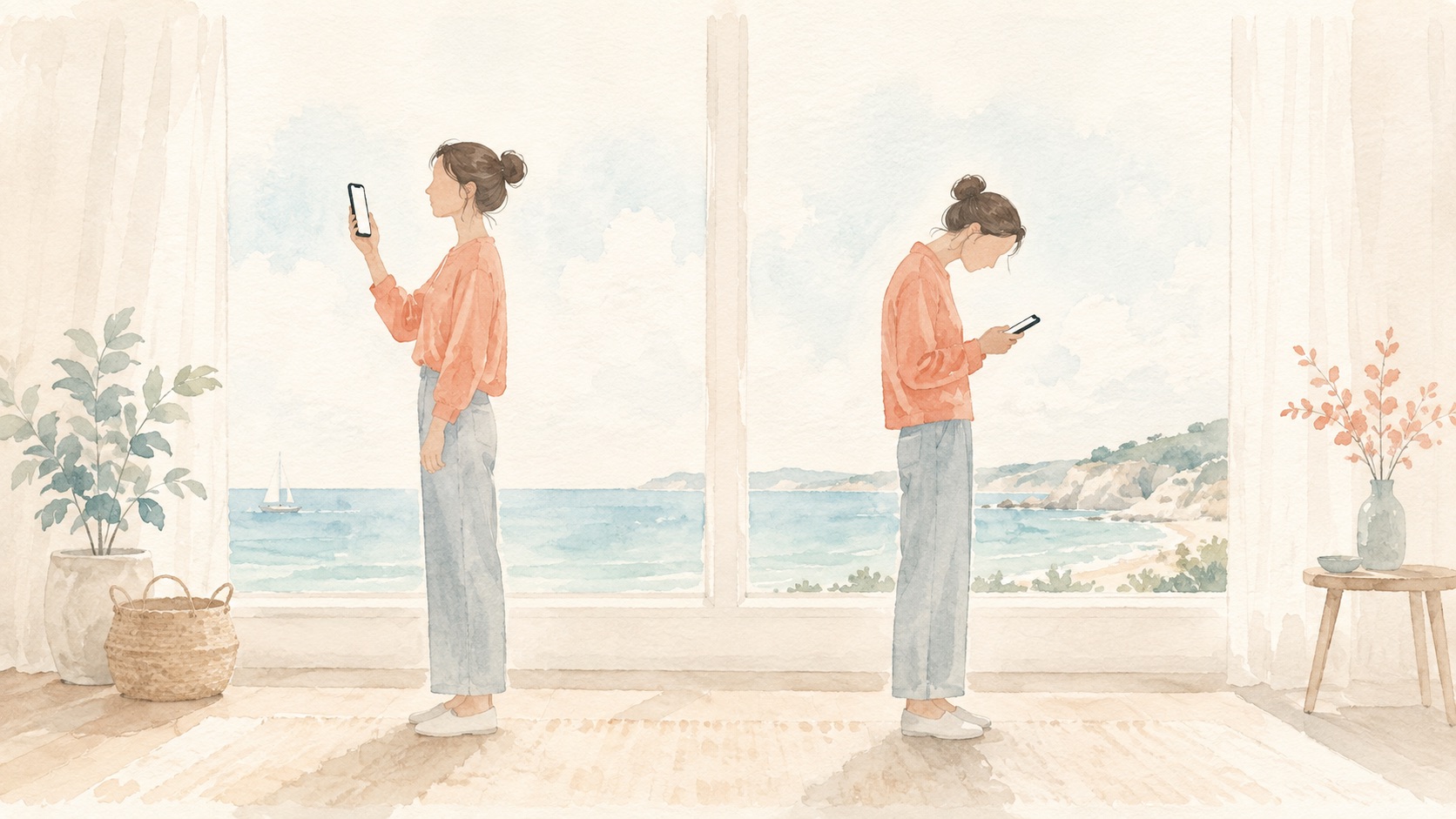
A head weighs about 10 to 12 pounds, roughly 4 to 5 kilograms, and the lower it tilts, the far heavier the load your neck actually carries. Posture research puts a 15-degree tilt at more than double the load, and 45 degrees or more at several times it. Looking at a phone usually means 45 degrees or more. Hold that a few hours a day and the back of the neck and shoulders stiffen, and over time the natural curve of the neck straightens out into what gets called tech neck.
| Body part | Warning sign | Cause | Do this now |
|---|---|---|---|
| Neck and shoulders | Morning stiffness, neck pain, headaches | Head-down posture held long | Raise the phone, tilt the head back every 20 minutes |
| Thumb and wrist | Pain below the thumb, tingling wrist | One-handed grip, thumb scrolling | Two hands, scroll with the index finger |
| Eyes | Dryness, redness, evening blur | Blinking drops by half or more | Every 20 minutes, look far away for 20 seconds |
| Sleep | Hard to fall asleep | Screens and arousal before bed | Thirty phone-free minutes before bed |
Hands hurt in two spots. Grip the phone one-handed and scroll with the thumb, and the tendons below the thumb take the strain. Bend the wrist to prop the phone up, and the nerve on the inside of the wrist gets compressed. Pain below the thumb or a tingling wrist, suspect this posture first. I went to a doctor about the pain below my right thumb and walked out with a conversation about my phone.
For eyes, the problem is blinking. People normally blink somewhere over a dozen times a minute, and in front of a screen it falls to half or less. Less blinking means the surface of the eye dries, and by evening things feel gritty and blurry. Focusing up close for long stretches also tires the muscles that do the focusing.
If changing posture and resting a few days brings no relief, get it checked. Neck pain running down into the arm or fingers, or numbness: an orthopedist or a spine specialist. Thumb pain bad enough that gripping is hard: an orthopedist. Blur that will not clear with rest, or eye pain: an eye doctor. The fixes in this article cover the light signals. Diagnosis belongs to a clinic.
The signals arrive in an order. Eyes first, then neck, then hands. Eyes report the same evening, gritty and immediate. The neck takes weeks of buildup before mornings give it away. Hands come months later. If gritty-eye evenings are getting frequent, that is the moment to cut the hours, before the neck and hands file their reports.
This article is general information, not medical advice. If symptoms persist, get them checked at a clinic.
A dive in Sumbi is a set stretch of time with the phone down, which means a set stretch where your neck, hands, and eyes rest. The screen can stay off without failing the dive, so stretch or stare out the window mid-dive all you like. Thirty minutes before bed, and the back of your neck feels different in the morning.
Start a 30-minute dive before bed →Instead of lowering your head, raise the phone. Holding it at eye level tires the arm, so support the phone arm's elbow with your other hand and it lasts. Lying in bed with the phone is the worst posture of all, which makes it the best time to cut first.
Every 20 minutes, spend 20 seconds looking at something about 20 feet away. It is the standard advice from the eye side. Tip your head back and roll your shoulders while you are at it and the neck rests too. Stopping every 20 minutes quietly trims total time as well.
Fix the posture all you want. At five hours a day, the body still struggles. In the end it is the hours. I started because of my neck, and after a few weeks of the after-9-p.m. drawer, the first thing that changed was my mornings. The body answered before the mind did.
One line from a phone-down day. About three weeks into the drawer practice, I woke up one morning and my neck was not stiff. I did not know why that day. It took a few more days to realize it had been the phone.
This article is general information, not medical advice. If sleep or daily life stays disrupted, talk to a professional.
Scan the QR with your phone to open the install page.
 Sumbi
Sumbi