The first week the phone lived in the drawer, the time before bed was so boring I could barely stand it. The hands hunted for a task and the eyes hunted for something to watch. So I went looking, one by one, for things that rest the hands and eyes without being unbearable. Seven survived.
Three tests pick a before-bed activity: the hands repeat or rest, the eyes take in less light, and it has an end. Seven things pass: audiobooks, paper books, light stretching, three lines written by hand, knitting or a puzzle, a warm drink, and just sitting. You don't need all seven. One or two is plenty.
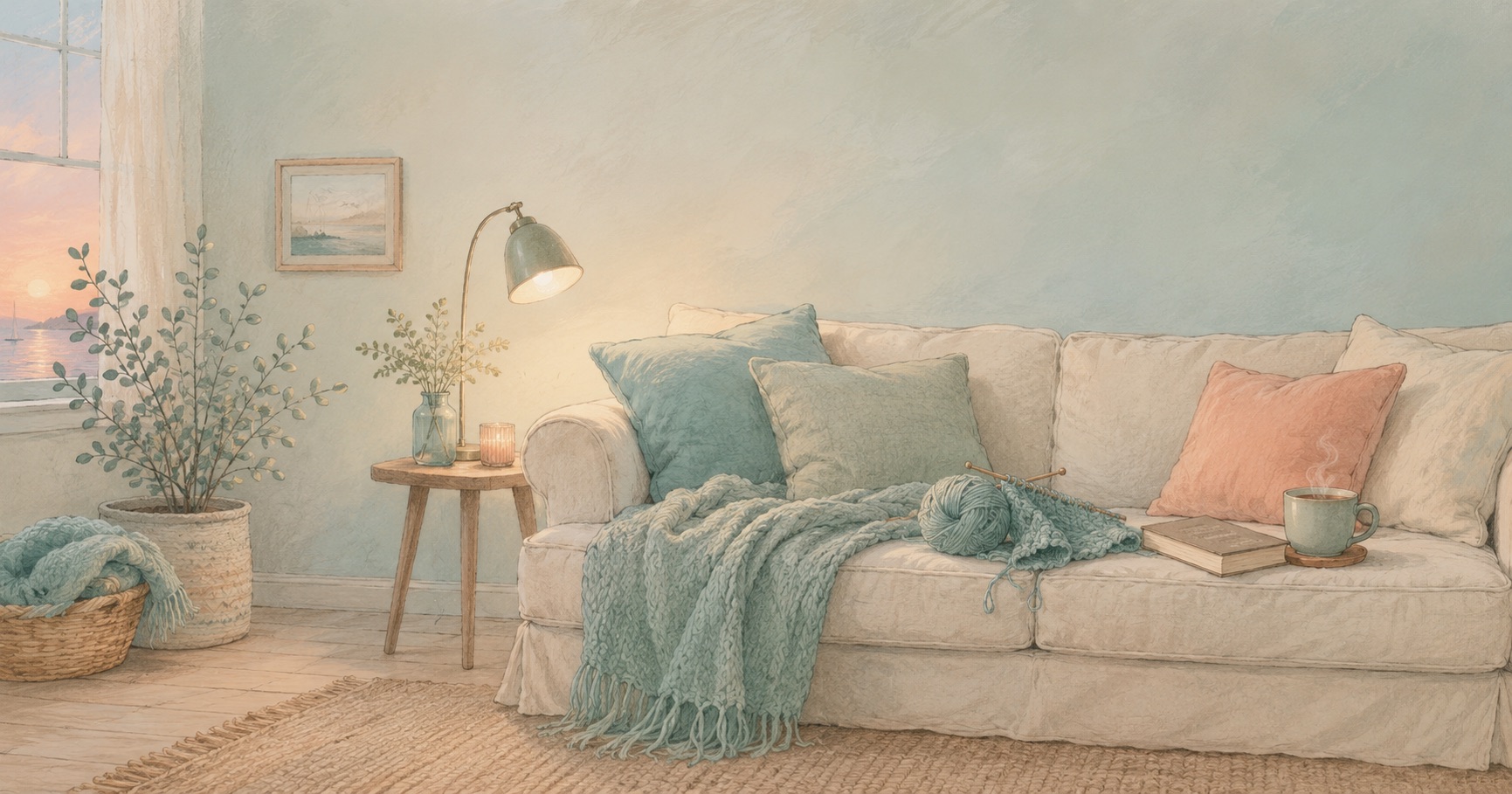
Hunt for a phone replacement and you end up hunting for something fun, and fun things postpone sleep about as well as the phone did. So the tests had to be something other than fun.
Over two months I tried more than ten. Here is what stayed, and why some things left.
| Activity | Why it helps sleep | Watch out for |
|---|---|---|
| Audiobook, quiet podcast | Eyes closed, one thread to follow | On the phone, other apps open. Use a speaker or a sleep timer |
| Paper book | Less light than a screen, chapters end | A gripping novel runs till dawn |
| Light stretching | Loosens muscle, lowers temperature | Sweating raises arousal instead |
| Three lines by hand | Moves tomorrow's worries onto paper | Writing long re-opens the thinking. Three lines, no more |
| Knitting, puzzles | The hands' repetition settles the head | Save the hard sections for daytime |
| A warm drink | You sit still while you drink it | Caffeine-free, and not too much |
| Just sitting | The body learns that nothing is required | The first days, even five minutes feels long |
Some things got cut. Drawing on a tablet was still a screen and ended up just like the phone. The guitar I picked up as a new hobby was so much fun it postponed sleep. Both are good activities. Neither fits the before-bed slot.
The one that stayed with me longest is the audiobook. You can lie down with your eyes closed, and a 20-minute timer brings the end to you. The catch is that listening on the phone means turning it on, and turning it on means other apps, so I connect a small speaker and the phone goes into the drawer. In a house with kids, letting the bedtime-story audio keep playing after the kid drifts off works too.
More important than which activity: the phone is not within reach. The finest activity in the world loses to a phone lying next to it within five minutes.
Start a dive in Sumbi, lay the phone face down, and the time your hands rest becomes the dive itself. Listen to an audiobook or knit: however long the phone stays unopened, the dive deepens, and finishing it opens a shell with a sea creature inside. Thirty minutes before bed becomes the time your sea grows by one.
Build your own sea →One alone gets stale. I pair stretching with the audiobook, body first, then lying down. Paired activities call each other so neither gets forgotten, and on a dull night, doing either one still counts.
If the book lives in the living room, the trip to fetch it passes the phone. Put the book, the notepad, and the speaker on the nightstand in advance, so the hand's destination is right there. The trick is letting other objects occupy the spot the phone used to hold.
The first days, every activity feels boring, because next to what the phone delivered, everything is. That boredom is the raw material of sleep. About a week in, there comes a moment when the boredom turns into drowsiness, and after that, some nights need no activity at all.
A parent's wind-down starts after the kid is asleep, but the time before that counts too. The 20 minutes of reading to your kid rests your own eyes and hands as well. I built a sequence that moves from their book to mine, and it had a side effect: I stopped picking up the phone on the way out of their room. For many parents, the 30 minutes after the kid falls asleep is the only time of day that belongs to them, and starting it with something other than the phone makes the night longer.
One line from a phone-down day. I went looking for things to do instead of the phone, and what I ended up learning is that nothing needs doing at all. Boredom was not something to endure. It was the road sleep comes in on.
This article is general information, not medical advice. If sleep or daily life stays disrupted, talk to a professional.
Scan the QR with your phone to open the install page.
 Sumbi
Sumbi